Your loved one asked for bond, but the immigration judge refused to hold a hearing. The reason may have sounded final: “mandatory detention” or “no jurisdiction.” For families, that moment can feel like the door has closed.
But if an immigration judge denied bond hearing access because ICE classified your loved one as “mandatory,” that is not always the end of the analysis. In some cases, a federal habeas corpus petition can ask a federal judge to review whether continued ICE detention is lawful, whether the “mandatory” label was properly applied, and whether due process requires a meaningful custody hearing.
This guide explains why bond hearings are sometimes refused, how “mandatory detention” works, and when federal court may offer a path forward.
In This Article
- Why Would an Immigration Judge Deny a Bond Hearing?
- What “Mandatory Detention” Means in ICE Custody
- EOIR Bond Hearing vs. Federal Habeas Petition
- When Federal Court May Be the Right Path
- What a Habeas Petition Must Show
- Possible Outcomes: Release, Bond, or a New Hearing
- What Families Should Gather Before Calling a Lawyer
- Frequently Asked Questions

Why Would an Immigration Judge Deny a Bond Hearing?
An immigration judge may refuse to hold a bond hearing when the judge believes the person is not legally eligible for custody redetermination. In many ICE detention cases, the explanation is that the person falls under mandatory detention, meaning the immigration court believes it cannot set bond at all.
EOIR’s bond procedures recognize that immigration judges handle custody and bond issues separately from removal proceedings, and federal regulations describe how custody and bond redetermination can be considered in immigration court. But that process has limits. If DHS or ICE places someone in a category that the immigration judge treats as outside regular bond jurisdiction, the family may hear: “the court has no authority to grant bond.” See the EOIR bond guidance and custody regulation for the immigration court framework. EOIR Policy Manual, Chapter 8.3; 8 C.F.R. § 1003.19.
The most common reasons include:
- ICE says the person is detained under 8 U.S.C. § 1226(c), the mandatory detention provision.
- The judge finds that the case falls outside ordinary bond jurisdiction.
- The person previously received a custody decision and the court finds no material change.
- The judge treats the issue as controlled by DHS custody classification rather than individualized bond factors.
This is where families should slow down before assuming nothing can be done. A “no bond” answer may describe what the immigration judge believes the immigration court can do. It does not always answer whether denied bond hearings can be challenged in federal court.
What “Mandatory Detention” Means in ICE Custody
Under immigration detention law, some people are detained under a discretionary framework, while others are treated as subject to mandatory detention. The basic detention statute, 8 U.S.C. § 1226, includes both a general detention-and-release provision and a mandatory detention provision for certain categories of noncitizens.
| Detention category | Practical effect | Why it matters |
|---|---|---|
| 8 U.S.C. § 1226(a) | Bond may be available through immigration court. | The immigration judge can usually consider danger and flight risk. |
| 8 U.S.C. § 1226(c) | ICE may argue detention is mandatory. | The immigration judge may say there is no authority to set bond. |
| Disputed classification | The legal basis for detention is unclear or contested. | A habeas petition may challenge whether the classification is lawful. |
Mandatory detention often comes up when ICE relies on a criminal history, a statutory category, or a timing argument. The Supreme Court has addressed the scope of mandatory detention in cases such as Nielsen v. Preap, which interpreted who may fall within § 1226(c). That decision is important, but it does not mean every ICE “mandatory” label is automatically correct in every case. Nielsen v. Preap.
Families should ask a more specific question: what statute is ICE using, and does it actually apply to this person’s facts? A federal habeas review may focus on that question, especially when the label blocks any meaningful chance to ask for release. For more on this issue, see our page on mandatory detention challenges.
EOIR Bond Hearing vs. Federal Habeas Petition
A regular bond hearing happens inside the immigration court system. A federal habeas petition is different. It is filed in federal district court under 28 U.S.C. § 2241, the habeas statute that allows federal courts to review unlawful custody.
That distinction matters because the immigration judge and the federal judge do not perform the same role. The immigration judge usually focuses on whether the person should be released on bond under the immigration court’s custody authority. The federal judge reviews whether the detention itself violates federal law, the Constitution, or proper statutory limits.
| Issue | Immigration bond hearing | Federal habeas petition |
|---|---|---|
| Court | Immigration court / EOIR | U.S. federal district court |
| Main question | Should the person be released on bond? | Is the detention lawful? |
| Judge | Immigration judge | Article III federal judge or magistrate judge involvement |
| Typical use | Bond amount, danger, flight risk | Unlawful detention, due process, wrong statute, prolonged custody |
| Possible relief | Bond granted, bond denied, bond amount changed | Release order, bond hearing order, government response, remand or other relief |
This is why a family may need to compare habeas corpus vs. immigration bond hearing after a refusal. A denied bond appeal may be useful in some cases, but when the problem is that the immigration judge says no hearing is available at all, federal court may become more important.
When Federal Court May Be the Right Path
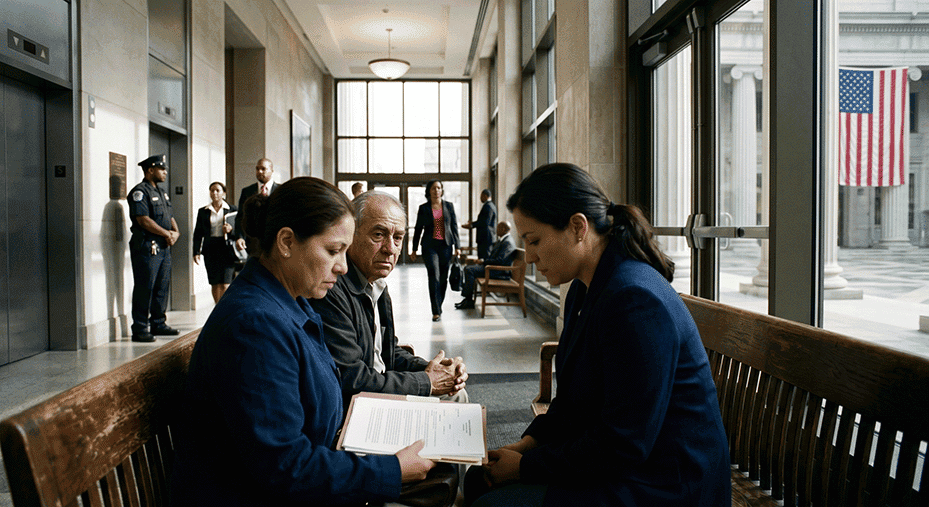
Federal court is not a second bond court. A habeas petition should be based on a legal problem with custody, not just disappointment with a bond result. But when ICE detention continues because the person was denied access to any meaningful hearing, the case may raise serious habeas issues.
Federal habeas may be worth evaluating when:
- The immigration judge refused to hold a hearing because of “no jurisdiction.”
- ICE classified the person as mandatory without a clear legal basis.
- The person has been detained for months with no meaningful review.
- The bond process ignored due process concerns.
- A denied bond appeal would be too slow to address an urgent liberty issue.
A denied bond hearing is not always the end of the road. The key question is whether the detention itself can be challenged as unlawful, prolonged, or based on the wrong legal classification.
The Supreme Court’s decision in Jennings v. Rodriguez rejected certain automatic statutory bond-hearing rules, but the case also involved habeas claims and left room for constitutional arguments to be litigated in appropriate cases. Families should avoid assuming that one denied hearing answers every federal custody question. Jennings v. Rodriguez.
If detention has become lengthy, the family should also consider whether the case overlaps with prolonged ICE detention. The longer detention continues without meaningful review, the more important timing, detention history, and procedural fairness may become.
Was your loved one denied a bond hearing because ICE called the case “mandatory”? A federal habeas petition may challenge whether ICE detention is lawful, especially when the person has no meaningful path to a bond hearing. Get Urgent Help before more time passes.
What a Habeas Petition Must Show
A habeas petition should tell a clear story: who is detained, where they are detained, what legal authority ICE claims, what happened in immigration court, and why continued custody is unlawful. Strong petitions are built on facts, documents, and a precise legal theory.
Depending on the case, the petition may argue that:
- ICE applied the wrong detention statute.
- The person does not actually fall under mandatory detention.
- Detention has become unreasonably prolonged without a meaningful hearing.
- The bond process failed to provide due process.
- A federal judge should order a lawful custody hearing or release.
The petition must also be realistic. Federal courts often cannot simply review every discretionary bond decision as if they were immigration bond judges. Section 1226 includes limits on review of certain discretionary detention or bond determinations. That is why the habeas theory usually focuses on the legality of detention, constitutional defects, or the denial of a meaningful process, rather than asking the federal judge to reweigh the same bond factors in the ordinary way. 8 U.S.C. § 1226.
Possible Outcomes: Release, Bond, or a New Hearing
A habeas petition can seek urgent relief, but outcomes depend on the facts, the district court, the detention statute, and the government’s response. No attorney can guarantee a release order.
Possible results may include:
- Release from ICE custody if the court finds detention unlawful and release is the appropriate remedy.
- A constitutionally adequate bond hearing if the court finds the person was denied meaningful custody review.
- A new or corrected hearing where the legal standard must be properly applied.
- Government action after filing, including a changed custody position or scheduled hearing.
- Denial of relief if the court finds detention lawful or the claim procedurally unsuitable.
The goal is not to promise a specific result. The goal is to move the case from a closed administrative loop into a forum where an independent federal court can decide whether the detention has crossed a legal line.
What Families Should Gather Before Calling a Lawyer
When a loved one is detained, time matters. A lawyer can evaluate a denied hearing faster when the family has the basic custody record ready.
- The detainee’s full name, date of birth, and A-Number.
- The current ICE facility and any recent transfer history.
- The Notice to Appear, charging documents, and hearing notices.
- Any bond order, bond denial, or written decision from the immigration judge.
- Criminal court records, if ICE relies on criminal history.
- Proof of family ties, medical issues, employment history, and community support.
- A timeline showing arrest date, ICE custody date, hearings, appeals, and denials.
If the family does not have every document, that should not stop the first call. But even a simple timeline can help identify whether the issue is a denied bond appeal, a no bond hearing ICE problem, or a federal court bond hearing immigration strategy.
Frequently Asked Questions
Can a federal judge overrule an immigration judge’s bond decision?
Sometimes federal court can provide relief, but the issue must be framed carefully. A habeas petition usually challenges unlawful detention, denial of due process, or a legally wrong custody classification. It is not a routine appeal of every discretionary bond decision.
Is habeas the same as a bond appeal?
No. A denied bond appeal generally stays inside the immigration system. Habeas corpus is a separate federal court case challenging custody. The right path depends on why the hearing was denied, how long detention has lasted, and what legal theory applies.
What if ICE says my loved one is under mandatory detention?
That label should be reviewed carefully. ICE may be correct in some cases, but mandatory detention classifications can be disputed when the statute does not fit the facts, when detention becomes prolonged, or when the person has been denied meaningful review.
How fast can a habeas petition be filed?
Timing depends on the available documents and facts. In urgent detention cases, counsel may move quickly once the legal basis, facility location, custody history, and prior hearing record are clear.
Can habeas force release from ICE detention?
In some cases, a federal court may order release. In others, the court may order a new bond hearing or require the government to justify continued detention. The remedy depends on the legal defect and the facts of the case.
A Denied Bond Hearing Is Not Always the Final Answer
When an immigration judge refuses to hold a bond hearing because of “mandatory detention” or “no jurisdiction,” the family should not assume every legal path is closed. The better question is whether ICE’s custody theory is legally correct, whether detention has become prolonged, and whether federal court can review the legality of custody through habeas corpus.
If your loved one was denied a bond hearing, fast review matters. The earlier the detention statute, hearing record, and timeline are analyzed, the faster a federal court strategy can be considered.
Was your loved one denied a bond hearing? Time is critical in ICE detention cases. A federal habeas petition may challenge unlawful detention, a wrongful “mandatory detention” classification, or the denial of a meaningful hearing. Call (862) 799-2200 or request an urgent case review today.
Legal Disclaimer
This article is provided for general informational purposes only and does not constitute legal advice. Every immigration case has unique circumstances. For legal guidance specific to your situation, we recommend consulting with an experienced immigration attorney. The information in this article reflects laws and policies as of the publication date; subsequent changes may affect its accuracy. Prior results do not guarantee a similar outcome.
Sources
- EOIR Policy Manual, Chapter 8.3 — Bond Proceedings, Executive Office for Immigration Review, accessed June 2026.
- 8 C.F.R. § 1003.19 — Custody/bond, Legal Information Institute, accessed June 2026.
- 8 U.S.C. § 1226 — Apprehension and detention of aliens, Legal Information Institute, accessed June 2026.
- 28 U.S.C. § 2241 — Power to grant writ, Legal Information Institute, accessed June 2026.
- Jennings v. Rodriguez, Justia U.S. Supreme Court Center, 2018.
- Nielsen v. Preap, Justia U.S. Supreme Court Center, 2019.
Every day in detention is a day away from your family.
If the immigration system has failed you, federal court may be the only answer. Let us review your case for free.
Get a Free Case Evaluation