The judge looked at the file and said it in one sentence: “I don’t have jurisdiction to set bond in this case.”
No hearing. No argument about whether your loved one is a flight risk. No chance to hand up the pay stubs, the children’s school records, the letters from the church. The case was over before it started, and the reason had nothing to do with anything your family member did in the last twenty years. It had to do with how they entered the country — sometimes decades ago, sometimes as a child.
If that is what happened, you are not dealing with a bad judge or a bad lawyer. You are dealing with a legal position the government adopted in July 2025, and the immigration court is no longer the place where it can be challenged. This guide explains what changed, what the statute actually says, where the federal courts have come down, and what a family can do about it.
In This Guide
- What Changed in July 2025
- The Two Statutes: § 1226(a) and § 1225(b)(2)
- Why the Government’s Reading Is Contested
- Where the Federal Courts Stand Today
- If Your Loved One Has Lived Here for Years
- Who This Reaches — and Who It Does Not
- What Families Can Do This Week
- What Habeas Can and Cannot Do Here
- Frequently Asked Questions

discretionary, it follows binding Board precedent.
What Changed in July 2025
For thirty years the rule was simple and nobody argued about it. A person who entered the United States without inspection and was later picked up by ICE somewhere inside the country went into removal proceedings and could ask an immigration judge for bond. The judge weighed flight risk and danger, looked at family ties and work history, and set a number or denied it. That was 8 U.S.C. § 1226(a), and it applied from 1996 until the summer of 2025.
In July 2025 the Department of Homeland Security issued unpublished guidance to ICE reclassifying those arrests. Under the new position, anyone who entered without inspection is an “applicant for admission” and is therefore detained under 8 U.S.C. § 1225(b)(2) — a statute Congress wrote for people arriving at a border or a port of entry. Section 1225(b)(2) carries mandatory detention. No bond hearing. No individualized assessment of anything.
The guidance was not published in the Federal Register and did not go through notice and comment. It applied immediately, and it applied backwards, sweeping in people whose lives here were a decade or two old.
On September 5, 2025, the Board of Immigration Appeals gave the position precedential force in Matter of Yajure Hurtado, 29 I&N Dec. 216 (BIA 2025). The respondent was a Venezuelan man who crossed near El Paso in November 2022, received Temporary Protected Status, and was detained after that status expired in April 2025. He argued that after three years of living here he was no longer “seeking admission.” The Board disagreed and held that immigration judges lack authority to hear bond requests at all for people present without admission.
After that decision, an immigration judge saying “I don’t have jurisdiction” is not exercising discretion. They are following binding Board precedent. Which is precisely why arguing harder in immigration court does not help — and why the fight moved to federal court.
The Two Statutes: § 1226(a) and § 1225(b)(2)
The entire dispute comes down to which of two detention statutes governs an arrest that happens inside the country. Congress wrote them for different situations.
| § 1226(a) | § 1225(b)(2) | |
|---|---|---|
| Written for | People already inside the country, in removal proceedings | People seeking admission at borders and ports of entry |
| Bond hearing | Yes, before an immigration judge | No — mandatory detention |
| Practice 1996 – July 2025 | Governed interior arrests, including entries without inspection | Governed arrivals and border encounters |
| Government’s position since July 2025 | Does not apply to anyone who entered without inspection | Applies to everyone who entered without inspection, regardless of how long ago |
Read the words themselves and the problem becomes visible. Section 1225(b)(2) turns on whether a person is “seeking admission.” Someone who crossed in 2004, married a U.S. citizen, raised two children here and has reported to every ICE check-in for a decade is not seeking admission. They are seeking to remain — which is what § 1226 is for.
The Supreme Court described § 1225 in Jennings v. Rodriguez, 583 U.S. 281 (2018), as operating at the nation’s borders and ports of entry, where the government decides whether someone trying to enter is admissible. That is the setting Congress had in mind.
Why the Government’s Reading Is Contested
Federal judges who have rejected the DHS position tend to give four reasons. None of them requires a novel legal theory.
- The words mean different things. “Applicant for admission” and “seeking admission” are not the same phrase. Treating them as identical erases a distinction Congress chose to draw.
- The statutes are structured apart. Section 1225 is titled inspection and expedited removal and describes what happens at the border. Section 1226 is titled apprehension and detention and describes what happens when someone is picked up inland.
- Thirty years of the government’s own practice. From 1996 until July 2025 the Executive Branch itself treated interior arrests as § 1226 cases. Courts look hard at an agency that reverses its own settled reading.
- The Laken Riley Act cuts against it. Signed on January 29, 2025 as Public Law 119-1, the Act amended § 1226(c) to require mandatory detention of people who entered without inspection and are charged with certain crimes. If § 1225(b)(2) already covered every such person, that amendment would have been pointless. Congress passed it six months before DHS announced the new reading.
There is also a constitutional dimension. If § 1225(b)(2) reached every person who ever entered without inspection, the government could hold hundreds of thousands of long-term residents indefinitely with no individualized review, based on a single fact from decades earlier. Courts generally prefer a reading that avoids that problem to one that creates it.
Where the Federal Courts Stand Today
Between March and May 2026, six federal courts of appeals ruled on the question. That is an extraordinary pace for immigration law. Four rejected the government’s reading. Two accepted it. One more has heard argument and has not yet decided.
| Circuit | States covered | Decision | Result |
|---|---|---|---|
| Second | CT, NY, VT | Barbosa da Cunha v. Freden (Apr. 28, 2026) | Rejected — § 1226(a) governs |
| Sixth | KY, MI, OH, TN | Lopez Campos v. Raycraft (May 11, 2026) | Rejected — plain-text reading |
| Seventh | IL, IN, WI | Castañon-Nava v. DHS (May 5, 2026) | Rejected — 2-1 panel |
| Eleventh | AL, FL, GA | Hernandez Alvarez v. Warden (May 6, 2026) | Rejected |
| Fifth | LA, MS, TX | Buenrostro-Mendez v. Bondi, 166 F.4th 494 (2026) | Accepted the DHS reading |
| Eighth | AR, IA, MN, MO, NE, ND, SD | Herrera Avila v. Bondi (Mar. 25, 2026) | Accepted the DHS reading |
| First | MA, ME, NH, PR, RI | Guerrero Orellana v. Moniz | Argued; decision pending |
The district courts have gone further than the appeals courts. Writing in late 2025, one federal judge observed that dozens of district courts across the country had rejected the DHS expansion, with more each day, and that only two had sided with the government. Judges in New Mexico, Oklahoma, Idaho, Indiana and elsewhere have ordered bond hearings for people who entered without inspection years or decades ago.
Two consequences follow, and both are practical rather than academic.
Where your loved one is physically held decides which law applies. Not where you live. Not where the immigration case is docketed. The habeas petition goes to the federal district court covering the detention facility, and that court follows its own circuit. A relative held in Michigan is in a very different position from one held in Louisiana.
An ICE transfer can move the case across that line overnight. This is not hypothetical; it happens routinely and it happens fast. If you have any indication that a transfer is coming, that is an emergency — see stopping an ICE transfer and our transfer checklist for families.
We track the two circuits that accepted the government’s reading in more detail in our analysis of Fifth Circuit bond rulings, and the Third Circuit’s approach to detention in New Jersey detention factors.
Was your loved one denied bond for entering without inspection?
Send us the A-Number and the name of the facility. We will tell you which circuit’s law applies, whether the argument is currently winning there, and how fast a petition would need to move — at no cost.
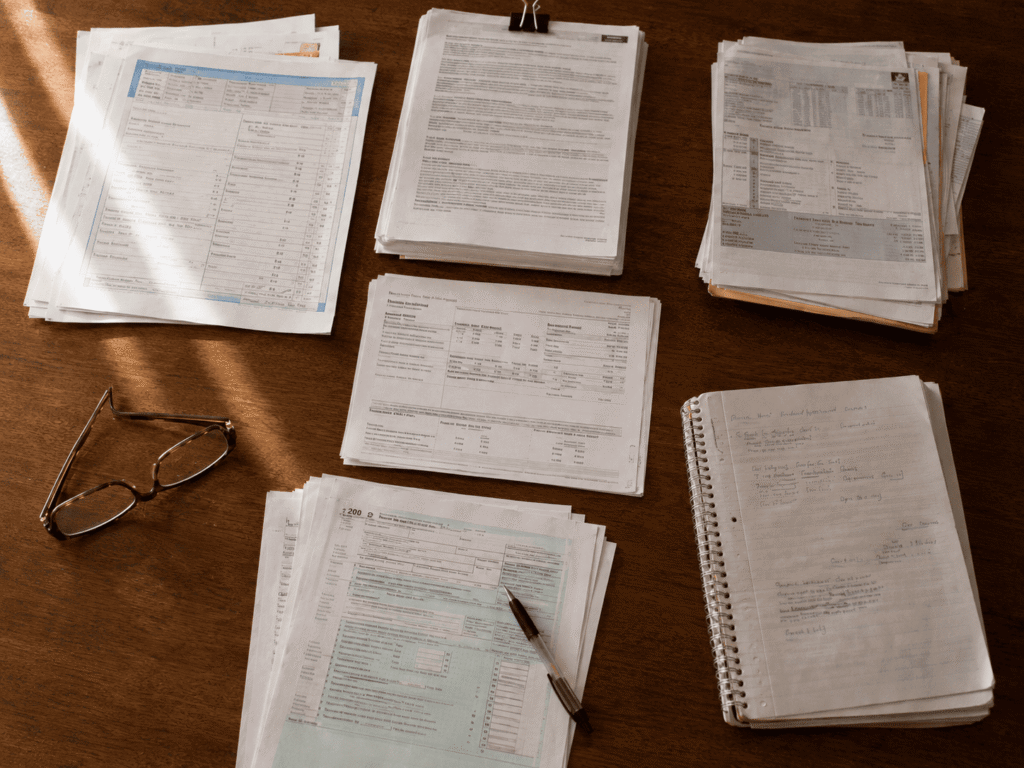
returns, pay stubs, school records and check-in receipts.
If Your Loved One Has Lived Here for Years
This is the fact pattern the government’s position handles worst, and the one federal judges have responded to most sharply.
In March 2026 a federal court in New Mexico heard the case of a Mexican national who had lived in the United States for twenty-five years, had never been arrested for anything, and was picked up while driving home from work. He is married with two U.S. citizen children; his younger son has chronic heart failure and needs a transplant. The immigration judge had no jurisdiction to consider bond. The federal court ordered a bond hearing within five days.
In Oklahoma, a federal court granted relief to a Guatemalan man who had been in the United States since he was four years old — roughly twenty years — and was being held without bond under the same rule.
Our own client from Honduras was denied a bond hearing on exactly this basis. After the immigration judge declined jurisdiction, we filed in federal court and he was released on a $1,500 minimum bond. Prior results do not guarantee a similar outcome, but that case is the pattern in miniature: the immigration court closes, the federal court opens.
The facts that matter most to a federal judge in these cases are the ones families already have:
- Length of residence. Years, not months. The longer the person has lived here, the harder it is to call them someone “seeking admission.”
- Compliance history. Every ICE check-in attended, every hearing appeared at, every reporting requirement met.
- No qualifying criminal record. Which keeps the case out of the separate mandatory-detention grounds in § 1226(c).
- Ties. U.S. citizen spouse or children, steady employment, tax filings, medical dependency, community standing.
Who This Reaches and Who It Does Not
Entry without inspection is not an unusual charge. It is the most common one in the immigration court system — used in the substantial majority of new cases. That is why this single reinterpretation moved so many people at once.
The position reaches: people who crossed the border without going through an inspection point, at any time, at any age, regardless of how long ago. It also reaches many people who were later released on parole, because parole is not legally an “admission.” If someone in that situation is re-detained, the government will generally take the same position.
It does not reach: people who were lawfully admitted at a port of entry — including those who entered on a visa and overstayed. An overstay is an admission followed by a violation of status, which is a different legal posture entirely. If your loved one came in on a visa, this particular argument does not apply to them, and a bond hearing should still be available.
A separate track applies where there is a criminal record that triggers mandatory detention under § 1226(c). That is its own analysis, covered in no bond because of a criminal record and mandatory detention challenges.
What Families Can Do This Week
There is one point of procedure worth knowing before anything else. You may be told to appeal the bond denial to the Board of Immigration Appeals first. Several federal courts have held that this is not required, because appealing to the same Board that issued the binding precedent would be futile — the agency has already decided the question. Counsel can go straight to federal court.
- Confirm the A-Number and the facility. Nothing can start without both. See finding someone in ICE detention.
- Get the immigration judge’s words. Whatever written order or hearing record exists showing that bond was refused for lack of jurisdiction. This document is the centre of the petition.
- Get the charging document. The Notice to Appear will show whether the charge is entry without inspection under INA § 212(a)(6)(A)(i) — that single line determines whether this guide applies to your case.
- Build the residence record. Tax returns, pay stubs, leases, utility bills, children’s school enrolment, medical records, letters from employers and community members.
- Watch for transfer signals. A facility saying your relative is “being moved” changes which circuit’s law applies. Treat it as an emergency.
- Get the case in front of federal counsel quickly. Both because detention length matters and because the appellate landscape is still moving.
Our first 24 hours after an ICE arrest guide covers the wider checklist, and how to file a habeas petition explains the mechanics of the filing itself.
What Habeas Can and Cannot Do Here
Being straight about this matters more than the pitch.
What a petition realistically achieves. In most successful cases the federal court does not order release outright. It orders the immigration court to hold the bond hearing it refused to hold. Your loved one then has to win that hearing on the merits — flight risk, danger, ties — and pay whatever bond is set. That is still a transformation of the case, because it moves the fight from inside a detention centre to from home. Some courts do order direct release, usually where detention has already been long. The difference between the two remedies is set out in habeas corpus vs. a bond hearing.
What it does not do. It does not grant status, fix a denied application, or cancel a removal order. It does not stop a deportation that is otherwise lawful. Winning does not end the immigration case; it changes where your loved one fights it.
A second argument, if the first one fails. Where the statutory argument is unavailable — in the Fifth or Eighth Circuits, for instance — there is a separate due process claim based on the length of detention. Once someone has been held roughly six months or more, most circuits will consider whether continued detention without any hearing has become unreasonable. The Eighth Circuit is the notable exception. This runs on Demore v. Kim and Jennings v. Rodriguez rather than on statutory interpretation, and it is covered in prolonged detention.
The question may not stay unsettled. A circuit split this sharp, on a question affecting this many people, is the kind the Supreme Court usually takes. If the First Circuit rules against the government the count becomes five to two, and a cert petition becomes likely. That could change the answer in either direction. Waiting for it, though, means waiting a year or more, and the detention continues in the meantime.
For the wider picture of how federal habeas works in ICE detention cases, see our habeas corpus and ICE detention guide, the statutory authority in 28 U.S.C. § 2241, what a case costs in cost and timeline, and the service page for this situation, denied bond hearings.
Frequently Asked Questions
Why did the immigration judge say they have no jurisdiction over bond?
Because of a Board of Immigration Appeals decision issued on September 5, 2025, Matter of Yajure Hurtado, 29 I&N Dec. 216. It holds that immigration judges lack authority to hear bond requests from anyone present in the United States without admission. That decision binds every immigration judge, so the ruling is not discretionary and arguing harder in immigration court will not change it. The remaining forum is federal district court.
My spouse has lived here for fifteen years. Does this really apply to them?
Under the government’s current position, yes — the length of residence does not matter to the classification. That is exactly why federal courts have pushed back. Four federal courts of appeals and dozens of district courts have held that someone who has lived here for years is not seeking admission and should be detained under 8 U.S.C. § 1226(a), which does allow a bond hearing.
What is the difference between § 1225(b)(2) and § 1226(a)?
Section 1226(a) is the detention statute for people already inside the country who are in removal proceedings, and it allows an immigration judge to set bond. Section 1225(b)(2) was written for people seeking admission at borders and ports of entry, and it requires mandatory detention with no bond hearing. Since July 2025 the government has argued that everyone who entered without inspection falls under 1225(b)(2), no matter how long ago they entered.
Does this apply to someone who overstayed a visa?
No. A person admitted at a port of entry on a visa who then overstayed was lawfully admitted, which is a different legal posture. The applicant-for-admission argument does not reach them, and a bond hearing before an immigration judge should still be available.
Which federal circuits have rejected the no-bond position?
As of May 2026, four courts of appeals rejected it: the Second Circuit in Barbosa da Cunha v. Freden, the Sixth in Lopez Campos v. Raycraft, the Seventh in Castañon-Nava v. DHS, and the Eleventh in Hernandez Alvarez v. Warden. The Fifth Circuit in Buenrostro-Mendez v. Bondi and the Eighth Circuit in Herrera Avila v. Bondi accepted it. The First Circuit has heard argument and has not yet decided.
Do we have to appeal the bond denial to the BIA before going to federal court?
Several federal courts have held that you do not, because appealing to the same Board that issued the binding precedent would be futile. The agency has already decided the question. Counsel can generally file the habeas petition directly, though the analysis depends on the district.
If we win the habeas petition, does my loved one come home?
Usually not immediately. In most cases the federal court orders the immigration court to hold the bond hearing it refused to hold. Your loved one then has to win that hearing on flight risk and danger, and the bond has to be paid. Some courts do order direct release, more often where detention has already been prolonged.
My relative was released on parole years ago and has now been re-detained. Does this affect them?
Probably yes. Parole is not legally an admission, so the government generally takes the same position on re-detention that it takes on an initial arrest. A long record of compliance while on parole is a strong fact for a habeas petition rather than an obstacle.
What if my loved one is detained in Texas or Louisiana?
Those states are in the Fifth Circuit, which accepted the government’s reading, so the statutory argument is harder there. It is not impossible — panels reconsider and facts differ — and a separate due process argument based on the length of detention remains available once detention has run roughly six months. Where the person is physically held on the day the petition is filed is what matters.
Could the Supreme Court change this?
It could. A split this pronounced on a question affecting this many people is the kind the Court usually resolves, and a cert petition becomes more likely once the First Circuit rules. A decision could go either way, and it would take a year or more. Detention continues in the meantime, which is why most families act now rather than wait.
The Door Moved. It Did Not Close.
Your loved one was denied a bond hearing because of how they entered the country, not because of anything they have done since. That reasoning has been rejected by four federal courts of appeals and by district courts across the country. It has not been rejected everywhere, and the law is still moving — which is exactly why the timing of a filing matters as much as its content.
The immigration court is closed on this question. The federal court is not.
Denied bond for entering without inspection? Let us review the case.
We file federal habeas petitions under 28 U.S.C. § 2241 nationwide, including emergency filings when a transfer is imminent. The initial assessment is free and we will tell you honestly whether the argument is currently winning in your circuit.
Phone: (+1) 862-799-2200
Email: info@gozellaw.com
Legal Disclaimer: This article is provided for general informational purposes only and does not constitute legal advice, and reading it does not create an attorney-client relationship. The law in this area is changing rapidly and the circuit landscape described here reflects decisions through May 2026. Every immigration detention case has unique circumstances. Prior results do not guarantee a similar outcome. Case results described here are specific to the facts of those matters. For guidance specific to your situation, consult an experienced immigration attorney.
Sources
- 8 U.S.C. § 1225 — Inspection by immigration officers; expedited removal, Cornell Legal Information Institute.
- 8 U.S.C. § 1226 — Apprehension and detention of aliens, Cornell Legal Information Institute.
- 28 U.S.C. § 2241 — Power to grant writ of habeas corpus, Cornell Legal Information Institute.
- Matter of Yajure Hurtado, 29 I&N Dec. 216 (BIA 2025), Interim Decision #4125.
- Barbosa da Cunha v. Freden (2d Cir. Apr. 28, 2026).
- Lopez Campos v. Raycraft (6th Cir. May 11, 2026).
- Castañon-Nava v. DHS, No. 25-3050 (7th Cir. May 5, 2026).
- Hernandez Alvarez v. Warden, No. 25-1406 (11th Cir. May 6, 2026).
- Buenrostro-Mendez v. Bondi, 166 F.4th 494 (5th Cir. 2026).
- Herrera Avila v. Bondi, No. 25-3248 (8th Cir. Mar. 25, 2026).
- Jennings v. Rodriguez, 583 U.S. 281 (2018), Supreme Court of the United States.
- Demore v. Kim, 538 U.S. 510 (2003), Cornell Legal Information Institute.
- Laken Riley Act, Public Law 119-1 (2025), Congress.gov.
- Habeas Corpus and ICE Detention Guide, My Habeas Lawyer.
- Habeas Corpus Case Results, My Habeas Lawyer.
Every day in detention is a day away from your family.
If the immigration system has failed you, federal court may be the only answer. Let us review your case for free.
Get a Free Case Evaluation